FAQ Schema Is Not Dead, It Just Changed Jobs
When Google cut FAQ rich results back to a narrow set of authoritative sites, a lot of teams stripped the markup out entirely. That was an overcorrection. The dropdown in the search result was only ever one of the jobs FAQ schema did, and it is no longer the most valuable one.
What Actually Changed
The change was to display eligibility, not to the vocabulary or how the markup is processed. Google decided the expandable FAQ blocks cluttered results and restricted them to a small group of well-established government and health sources. FAQPage markup on a commercial page is still parsed; it just usually does not produce a visual enhancement.
It helps to separate the three things people mean when they say "FAQ schema stopped working". The visual dropdown in Google results: mostly gone for commercial sites. The parsing and understanding of the markup: unchanged. The value of writing content as clear question and answer pairs: higher than it has ever been, because that is the format every generative answer system is built to consume. Removing the markup only addresses the first one, and it takes the other two with it.
Job One: Feeding Generative Answer Engines
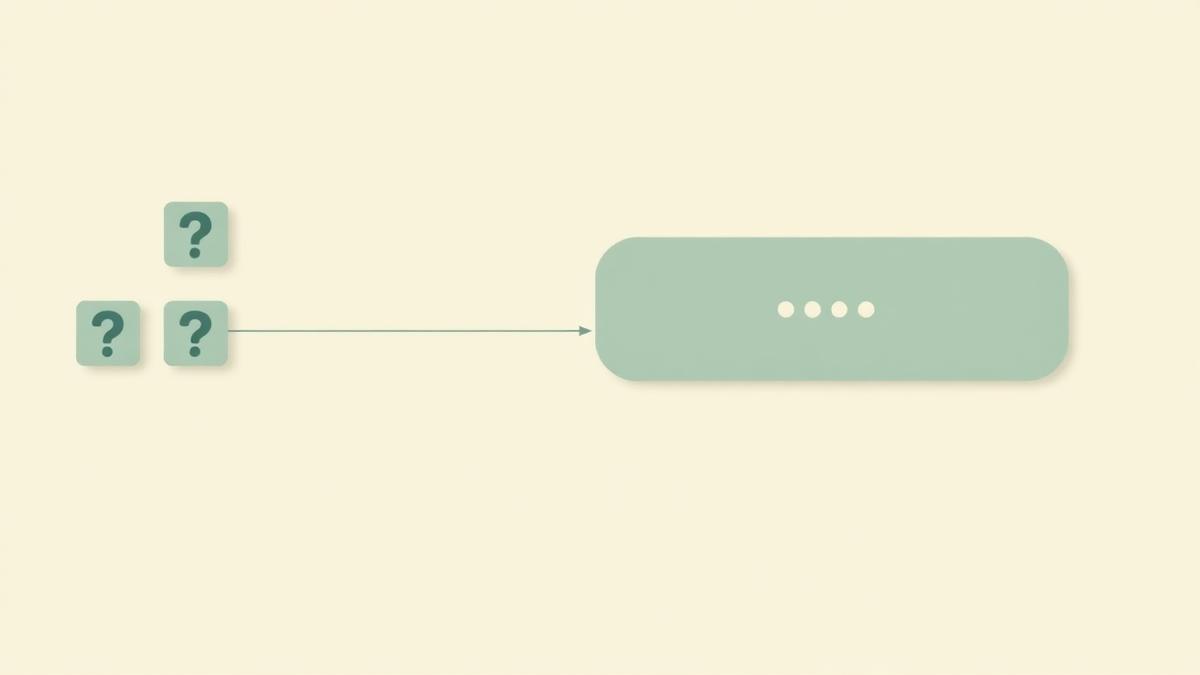
AI assistants assemble answers by retrieving passages and paraphrasing them. The easiest passage to retrieve is one where the question is stated explicitly and the answer sits immediately after it, self-contained, without needing the rest of the page for context. That is exactly the shape FAQ markup enforces.
The markup is not magic on its own, the visible text does the work. But writing to satisfy FAQPage markup pushes you into short, quotable, standalone answers, which is the single most useful content habit for AI visibility. This connects directly to why brands go missing from ChatGPT search: most pages simply have no extractable answer on them.
Why the question and answer shape retrieves so well
Retrieval works on chunks. A page is split into passages, those passages are embedded, and the ones that best match the query get passed to the model that writes the answer. A question heading with a self contained answer beneath it is close to a perfect chunk: it states its own topic, it resolves in a few sentences, and it needs no surrounding context to make sense. A long flowing section covering four ideas is a poor chunk no matter how well written, because every retrieved fragment is partially about something else.
This is why the markup is worth keeping even when it produces no visible enhancement. It forces the page into chunks that survive extraction, and it labels which text is the question and which is the answer so nothing has to be inferred.
Job Two: Featured Snippets and People Also Ask
Featured snippets and PAA boxes are still very much alive, and both favour the same format: a question-shaped heading with a direct answer of roughly forty to sixty words beneath it. Pages built around a genuine FAQ block tend to pick these up because the structure matches what gets extracted.
- Phrase the heading the way a person types or speaks the question.
- Answer in the first sentence. Do not build up to it.
- Keep each answer independent, with no "as mentioned above".
- Add the detail, caveat, or example after the direct answer, not before it.
Length has a practical range. Around 40 to 60 words is what tends to get lifted whole into a featured snippet, and roughly 50 to 100 words reads well as a standalone answer for a person. Below about 25 words the answer usually lacks the qualifier that makes it useful. Above about 120 words it stops being extractable and becomes a section.
Job Three: Entity and Topic Clarity
An FAQ block is also one of the cheapest ways to state facts about your business in machine-readable form: what you do, who you serve, where you operate, how engagements work, what things cost. Combined with Organization and Service markup, it gives retrieval systems consistent, repeatable statements to draw on when someone asks about your category.
How to Implement It Properly
The implementation itself is short. What matters is that the markup and the visible text are the same words, which is easiest to guarantee by rendering both from one source rather than maintaining two copies.
Visible HTML:
<details>
  <summary>Does FAQ schema still produce rich results?</summary>
  <p>Only in limited cases. Google narrowed FAQ rich results to a small
  set of authoritative government and health sites.</p>
</details>

Matching JSON-LD:
{
  "@context": "https://schema.org",
  "@type": "FAQPage",
  "mainEntity": [{
    "@type": "Question",
    "name": "Does FAQ schema still produce rich results?",
    "acceptedAnswer": {
      "@type": "Answer",
      "text": "Only in limited cases. Google narrowed FAQ rich results to a set of authoritative government and health sites."
    }
  }]
}
In practice that means holding the questions and answers in a single array in your template and mapping over it twice, once to render the visible block and once to build the JSON-LD. Every FAQ block on this site is built that way, which is the only reliable way to keep the two in sync through months of edits.
FAQPage or QAPage
Use FAQPage when your site writes both the question and the answer, and there is one authoritative answer per question. Use QAPage only for a genuine user submitted question with community answers, where votes and multiple suggested answers exist. Applying QAPage to an ordinary support FAQ misdescribes the page and is one of the more common errors I find during audits.
The checklist
- Mark up only visible text. The JSON-LD answer must match the on-page answer word for word.
- One FAQ set per page, and make it topical. Do not paste the same six questions across the site.
- Use FAQPage, not QAPage, when you author both the questions and the answers.
- Keep answers in the initial HTML. Collapsed with details and summary is fine; loaded by JavaScript on click is not.
- Validate it. Invalid JSON-LD fails silently, so test after every template change.
- Write real questions. Pull them from sales calls, support tickets, and PAA boxes rather than inventing them.
Common mistakes
- The same FAQ block sitewide. Identical markup on 300 URLs is a duplication signal, not a visibility strategy.
- Marketing copy dressed as questions. "Why should I choose us?" is not a query anyone types.
- Answers loaded by JavaScript on click. If the text is not in the initial HTML it is not reliably seen.
- Markup that says more than the page shows. Extra answers, prices, or claims present only in JSON-LD.
- Nesting FAQPage inside another FAQPage, or declaring several FAQPage blocks on one URL.
- Removing the markup entirely because the rich result went away, which is where this article started.
How to tell whether it is working
The rich result report is no longer the measurement. Instead, watch the queries in Search Console that are phrased as questions and check whether impressions and average position improve for the page carrying the FAQ. Then run the same questions through the assistants your buyers use and record whether your page is the one being paraphrased or cited. Both are imperfect. Together they tell you far more than a rich result eligibility check ever did.
The Honest Summary
FAQ schema is no longer a way to win a bigger search result. It is now a structural discipline that makes pages easier to quote, by snippets, by PAA, and by AI assistants. That is a less flashy job than it used to have, and a more durable one.
Frequently Asked Questions
Does FAQ schema still produce rich results in Google?
Only in limited cases. Google narrowed FAQ rich results to a small set of authoritative government and health sites, so most commercial pages should not expect the expandable dropdowns in search results any more.
If the rich result is gone, why keep the markup?
Because it does three other jobs: it makes a page's question-and-answer pairs machine-readable for retrieval systems behind AI answers, it enforces a structure that wins featured snippets and People Also Ask placements, and it keeps a clean fallback if eligibility changes again.
Can FAQ schema hurt a page?
Yes, if it describes content that is not visible on the page, duplicates the same questions across many URLs, or wraps marketing copy pretending to be a question. Mismatched markup is ignored at best and can trigger a structured data manual action at worst.
How many questions should a page have?
Between four and eight genuine questions that people actually ask about that specific topic. Padding to hit a number produces weak answers, which is the opposite of what both snippets and answer engines reward.
Should the FAQ block be collapsed or expanded by default?
Either is fine as long as the text exists in the initial HTML. Native details and summary elements work well because the content is present and crawlable even while visually collapsed.
Is FAQPage or QAPage the right type?
FAQPage is for a page where the site author writes both the questions and the answers. QAPage is for user-generated question threads with multiple submitted answers. Using QAPage on an ordinary FAQ block is a common and easily avoided error.
Want your pages structured for AI answers?
Schema, answer formatting, and entity signals, implemented across your key templates.